

How the VALOR-QI program helped thousands of Veterans improve their cholesterol through personalized team-based care
Addressing Gaps in Lipid Management for Veterans
A nationwide VA quality improvement initiative has shown that targeted, low-cost strategies can help address persistent gaps in cholesterol management for Veterans with cardiovascular disease, according to findings recently published in JACC: Advances.
Atherosclerotic cardiovascular disease (ASCVD) is one of the leading causes of illness and death among U.S. Veterans. Elevated low-density lipoprotein cholesterol (LDL-C), often referred to as “bad” cholesterol, is a major treatable risk factor. While effective medications to lower LDL-C are widely available, challenges with medication adherence, limited patient education, clinical workflow issues, and inconsistent lipid monitoring all contribute to about two-thirds of Veterans with ASCVD not reaching recommended cholesterol goals.
To address these gaps in care, the U.S. Department of Veterans Affairs partnered with the American Heart Association to launch the Veterans Affairs Lipid Optimization Reimagined Quality Improvement (VALOR-QI) Program.
More than 88,000 Veterans with elevated LDL-C participated in the program between December 2022 and September 2025 across 50 VA medical centers. At each participating site, American Heart Association consultants partnered with local clinical teams to identify barriers to lipid management and develop improvement strategies tailored to each site’s needs. The initiative became the first and largest quality improvement program across the VA network focused specifically on improving lipid management for Veterans with ASCVD.
ARTICLE TITLE:
A Novel Approach to Manage Hypercholesterolemia: Veterans Affairs Lipid Optimization Reimagined Quality Improvement Program
JOURNAL:
JACC: Advances
AUTHORS:
Luc Djousse, Rachel E Ward, Helen Marucci-Wellman, Nedim Yel, Kristin Colson, Abigail A Santos, Mason Coleman-Lopez, Eddie Pan, Tharen Leesch, David Peña, Michelle Congdon, Michele Bolles, David Gagnon, J Michael Gaziano
ARTICLE PUBLICATION DATE:
18 June 2026
RESEARCH KEYWORDS:
atherosclerosis, cardiovascular disease, dyslipidemia, epidemiology, quality improvement, statins
DOI:
Bringing VALOR-QI to Veterans in Salt Lake City
WIVR investigators Dr. Lowell Chang and Dr. Erik Bieging, along with health coach Natalie Coombs-Vaterlaus, implemented the VALOR-QI program within the VA Salt Lake City Health Care System. The team focused on identifying obstacles that prevented Veterans from reaching healthy cholesterol levels and then implemented specific strategies tailored to their local Veteran community’s needs.
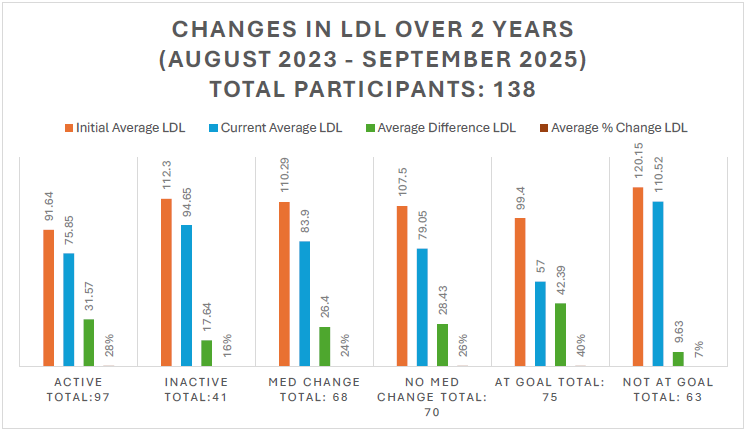
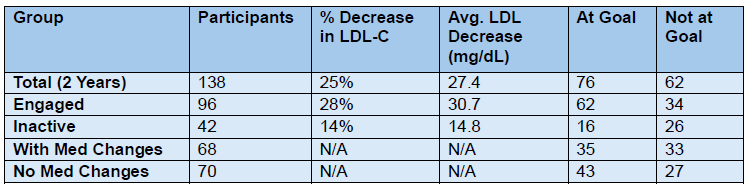
A central component of the VALOR-QI program was the use of health coaches. Acting as a link between Veterans and their healthcare teams, Natalie Coombs-Vaterlaus engaged 138 Veterans over a two-year period. She provided participants with education about cholesterol management, encouraged healthy lifestyle changes, coordinated referrals, reinforced the importance of taking prescribed medications, reminded Veterans about upcoming appointments and laboratory testing, and celebrated milestones as Veterans accomplished their goals. This personalized approach helped bridge the gap between clinic visits and practical everyday cholesterol-management habits.
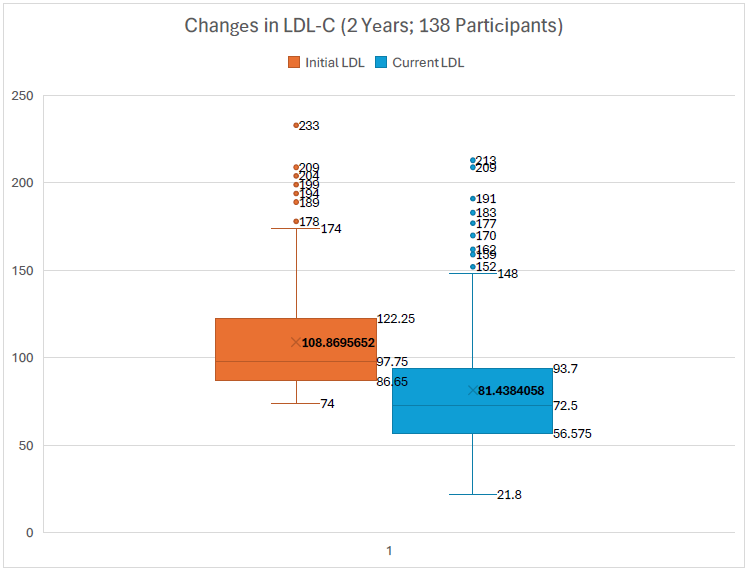
Among Veterans enrolled at the VA Salt Lake City Health Care System, LDL-C decreased by an average of 27.4 mg/dL, with 76 participants achieving the recommended LDL-C goal of less than 70 mg/dL.
Expanding Access to Effective Cardiovascular Care
These local outcomes reflected the broader impact of the VALOR-QI program. Nationwide, approximately one-third of participating Veterans with elevated LDL-C reached the recommended LDL-C goal. LDL-C levels on average dropped by 16.6 mg/dL over the course of the program, and the percentage of participants using lipid-lowering therapy rose from 77.4% to 87.8%. Medication adherence also improved, rising from 56.3% to 65.1%.
The findings demonstrate a sustainable model for making existing treatments more accessible and effective. Researchers note that the strategies used in the VALOR-QI program are simple, low-cost, and easily integrated into routine clinical practice. Similar approaches could be adopted to improve management of other chronic diseases, including hypertension and diabetes.
For Veterans living with cardiovascular disease, quality improvement initiatives like VALOR-QI highlight how coordinated care, ongoing patient support, and consistent follow-up can improve cholesterol control and support long-term heart health.
References
Djousse L, Ward RE, Marucci-Wellman H, et al. A Novel Approach to Manage Hypercholesterolemia: Veterans Affairs Lipid Optimization Reimagined Quality Improvement Program. JACC Adv. 2026;5(7):102935. doi:10.1016/j.jacadv.2026.102935
