

The Psychological Impact of Blast Exposure on Service Members
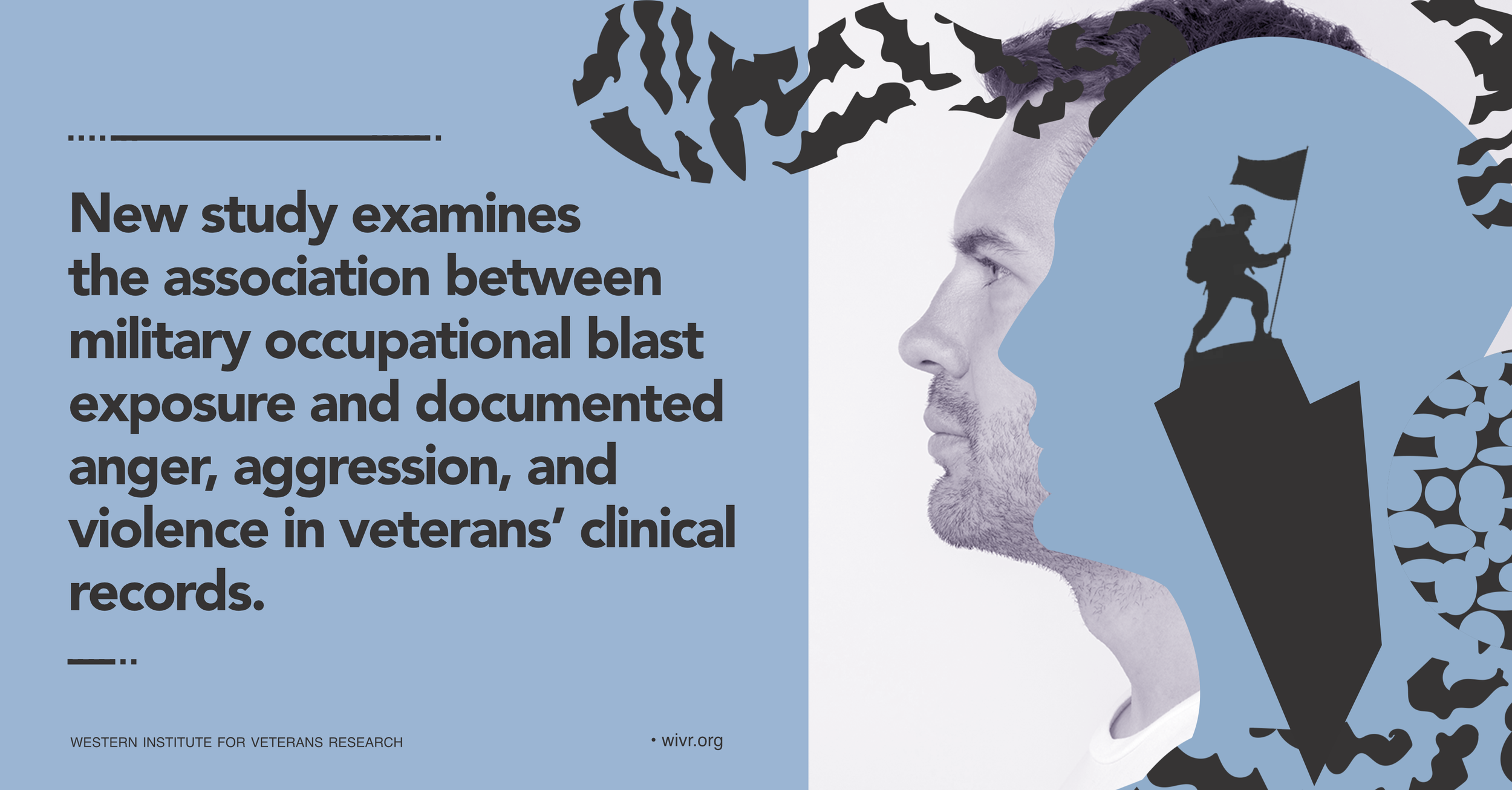
Routine Military Blast Exposure Linked to Higher Rates of Anger and Aggression in Veterans
A new study published in Military Medicine suggests that veterans whose military occupations involved repeated exposure to low-level blast waves are more likely to have anger, aggression, and violence-related concerns documented in their medical records.
Researchers from the U.S. Department of Veterans Affairs (VA), led by Eamonn Kennedy, PhD, analyzed the clinical records of 10,000 veterans to examine whether military occupational blast and impulse exposure (MOBE) was associated with documented anger, aggression, and violence (AAV).
The association between MOBE and AAV remained significant even after accounting for other military-related factors linked to behavioral health, including post-traumatic stress disorder (PTSD), traumatic brain injury (TBI), combat exposure, and deployment history. Despite these findings, documentation of anger and aggression remained relatively uncommon among veterans, and less than 3% of all clinical notes contained evidence of related to anger, aggression, or violence.
❛❛ Although the effect was moderate, our findings do suggest that long-term occupational blast exposure is a risk factor for anger, even independently of other military exposures. ❜❜
— Eammon Kennedy, PhD (quoted in University of Utah Health, 2026)
A Closer Look at Military Occupational Exposure
Certain military occupations involve repeated exposure to low-level blast waves, including weapons training, artillery operations, breaching exercises, and other routine activities. These blasts are typically too weak to cause an immediate injury, like a concussion; however, researchers are increasingly investigating whether repeated low-level blast exposure over many years has cumulative effects on brain health and behavior.
This repeated exposure is known as military occupational blast and impulse exposure (MOBE). The long-term biological effects of MOBE remain an active area of research; however, a growing body of evidence suggests they may contribute to neurological and psychological health problems later in life.
Anger and aggression are important outcomes for veterans’ health, as they can affect relationships, daily functioning, psychological well-being, and suicide risk. Past research has struggled to identify specific, modifiable risk factors due to small sample sizes, over-reliance on self-reported data, and because these behaviors are influenced by several other factors, including combat experiences, PTSD, TBI, and other aspects of military service.
Analyzing Millions of Clinical Notes
Advances in artificial intelligence (AI) and large language models (LLMs) allowed researchers at the Department of Veterans Affairs to analyze large amounts of clinical text from VA health records—a task that would have been an impossible undertaking to review manually. The study included health records from 10,000 veterans receiving care through the Veterans Health Administration and Department of Defense. 5,000 veterans with occupations considered at highest risk for routine blast exposure were matched with 5,000 veterans in lower-risk occupations based on age, sex, and race or ethnicity.
Researchers examined veterans’ medical records for documentation related to anger, aggression, or violence. These included notes describing aggressive or violent behavior, discussion of anger triggers or explosive outbursts, and participation in anger management therapy. A veteran was considered to have AAV-related documentation if at least 5% of their clinical notes contained this type of language.
In total, the team analyzed 3.64 million clinical notes—an average of 364 notes per veteran.
To process this enormous dataset, researchers used AI methods trained to detect language related to anger, aggression, loss of control, and related behavioral concerns. The approach was validated and achieved approximately 96% accuracy on 1,000 manually reviewed examples.
Higher Rates of Documented Anger and Aggression
The study found that veterans in occupations with higher routine blast exposure were more likely to have AAV-related documentation than matched controls (17.2% vs. 12.0%).
Veterans in high-blast occupations additionally had 53% higher odds of having AAV documented in their records compared with veterans in lower-blast occupations. The association remained statistically significant at 22% higher odds even after adjusting for demographic factors, combat exposure, deployment history, substance use disorders, and traumatic brain injury.
Researchers also identified several other factors associated with documented anger and aggression. Veterans with TBI or combat exposure were independently more likely to have AAV documented, while older veterans and female veterans were less likely to have these concerns recorded.
PTSD also influenced the relationship between blast exposure and AAV. When PTSD was included in statistical models, the association between MOBE and AAV became weaker, reflecting a significant overlap between blast exposure, trauma-related conditions, and anger symptoms, but remained significant.
The Bigger Picture for Veterans’ Health
The study adds to growing evidence that repeated occupational blast exposure may have long-term behavioral health consequences that extend beyond immediate physical injury.
Importantly, the findings do not suggest that blast exposure is the sole cause of anger or aggression. These behaviors are shaped by many interacting factors, including PTSD, TBI, combat experiences, substance use, and other aspects of military service. Instead, the results indicate that routine occupational blast exposure may represent an additional, independent risk factor.
Because much of occupational blast exposure occurs during training, the research also points to opportunities for prevention. The research team notes that improved safety measures, changes in training practices, or technologies that reduce unnecessary blast exposure could potentially lower long-term health risks.
❛❛ Occupational blast exposure is largely modifiable because it typically occurs during training, where we have very, very controlled situations, and that gives us access for reducing harm. ❜❜
— Eammon Kennedy, PhD (quoted in University of Utah Health, 2026)
The researchers note several limitations. The study relied on occupational categories as a proxy for blast exposure, meaning they could not measure the exact number or intensity of blasts each veteran experienced. Anger and aggression may also be underreported in clinical settings. These limitations point to the need for further research to better understand how to protect and care for service members exposed to routine low-level blasts.
The study adds to a growing body of research examining how repeated low-level blast exposure may influence veterans’ long-term health and highlights opportunities to improve prevention and care.
This work was supported by the Department of War, through the Psychological Health/Traumatic Brain Injury Research Program Long-Term Impact of Military-Relevant Brain Injury Consortium (LIMBIC) Award/W81XWH-18-PH/TBIRP-LIMBIC under award No. W81XWH1920067 and W81XWH-13-2-0095, and by the US Department of Veterans Affairs Award No. I01 RX003443, as well as by the VA Health Services Research and Development Service Award No. IHX002608A and the VA HSR&D Informatics, Decision-Enhancement, and Analytic Sciences Center of Innovation (CIN 13-414).
References
Eamonn Kennedy, Shashank Vadlamani, Megan Amuan, Ian J Stewart, Shannon R Miles, Sarah L Martindale, Lisa A Brenner, Mary Jo Pugh, When the Fuse Is Lit: Association of Military Occupational Blast Exposure With Anger, Aggression, and Violence, Military Medicine, 2026;, usag217, https://doi.org/10.1093/milmed/usag217
University of Utah Health. (2026). Jobs with high exposure to low-level explosions associated with increased risk of anger.https://uofuhealth.utah.edu/newsroom/news/2026/06/jobs-high-exposure-low-level-explosions-associated-increased-risk-of-anger
ARTICLE TITLE:
When the Fuse Is Lit: Association of Military Occupational Blast Exposure With Anger, Aggression, and Violence
JOURNAL:
Military Medicine
AUTHORS:
Eamonn Kennedy, Shashank Vadlamani, Megan Amuan, Ian J Stewart, Shannon R Miles, Sarah L Martindale, Lisa A Brenner, Mary Jo Pugh
ARTICLE PUBLICATION DATE:
13 May 2026
RESEARCH KEYWORDS:
medical records, aggressive behavior, anger, traumatic brain injuries, ethnic group, military personnel, semantics, post-traumatic stress disorder, veterans, violence, impulse, basic local alignment search tool, combat exposure, military health, large language models
DOI:
