


IRAKLIA trial supports FDA approval of first anticancer therapy delivered via on-body injector
The U.S. Food and Drug Administration (FDA) recently approved an on-body injector for Sarclisa Escena® (isatuximab-irfc), making it the first anticancer therapy in the United States available through this type of wearable device. WIVR is proud to have served as a participating site for the IRAKLIA Phase 3 clinical trial that contributed to the evidence supporting this approval.
A new FDA approval is changing how certain cancer therapies can be delivered.
The U.S. Food and Drug Administration (FDA) recently approved an on-body injector for Sarclisa Escena® (isatuximab-irfc), making it the first anticancer therapy in the United States available through this type of wearable device. WIVR is proud to have served as a participating site for the IRAKLIA Phase 3 clinical trial that contributed to the evidence supporting this approval.
Multiple myeloma is a rare type of cancer that forms in the plasma cells of the bone marrow, the body’s blood-forming system. When these cells become cancerous, they can interfere with the production of healthy blood cells and affect the body’s ability to fight infection. This disease can lead to kidney failure, bone disease, and increased risk of infections. While multiple myeloma is generally considered incurable, advances in treatment have made it increasingly manageable for many patients, with some experiencing long periods of remission.
From IV Infusion to On-Body Injector
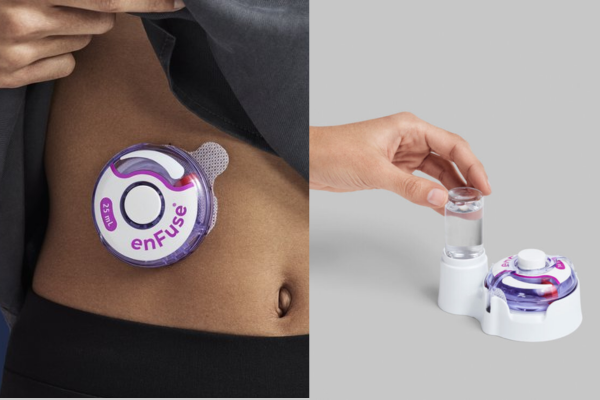
Image source: Enable Injections
First approved in 2020 by the FDA, Sarclisa (isatuximab-irfc) is a medication that works by helping the immune system identify and attack myeloma cells. It is used in combination with other therapies to treat certain patients with multiple myeloma.
Until now, the medication has traditionally been administered by IV infusion, requiring extended time in infusion clinics. The newly approved formulation is delivered subcutaneously using the CirCLIQ® on-body injector, a wearable device designed to reduce hands-on time for clinical staff and shorten treatment administration time for patients.
Sanofi launched the IRAKLIA clinical trial in 2022, which was designed to evaluate whether this subcutaneous, on-body injection version of Sarclisa could provide comparable safety and effectiveness to the established IV formulation.
The randomized, open-label study enrolled 531 participants with relapsed or refractory multiple myeloma who had received at least one prior line of therapy. Participants were randomly assigned to receive either subcutaneous Sarclisa administered through the CirCLIQ® on-body injector or IV Sarclisa, both in combination with pomalidomide and dexamethasone. Results from the study demonstrated that subcutaneous administration achieved comparable efficacy, pharmacokinetic, and safety outcomes to IV delivery.
The subcutaneous formulation also reduced treatment administration time and resulted in fewer systemic administration reactions.
WIVR served as a participating site for the IRAKLIA trial, enrolling Veteran participants at the George E. Wahlen VA Medical Center in Salt Lake City.
The site was led by Principal Investigator Dr. Tsewang Tashi and Clinical Research Coordinators Denise Pessetto and Elle Brooks. The work of the research team and the Veterans who participated in the IRAKLIA trial contributed to the multicenter study that supported this FDA approval.
The approval of the Sarclisa Escena® on-body injector provides patients with multiple myeloma and their care teams with another option for treatment administration. WIVR is proud to have contributed to the research that supported this advancement.
Read more about the IRAKLIA trial and WIVR’s research here.
Disclaimer: WIVR is an independent clinical trial site and served as a participating site in the IRAKLIA clinical trial, sponsored by Sanofi. WIVR is not affiliated with, owned by, or a subsidiary of Sanofi, and does not speak on Sanofi’s behalf. Sarclisa, Sarclisa Escena, and related trademarks are the property of Sanofi. CirCLIQ and enFuse are trademarks of Enable Injections. This post is for informational purposes only and is not medical advice.
RESEARCH KEYWORDS:
multiple myeloma, relapsed refractory multiple myeloma, Isatuximab-irfc, Sarclisa Escena, Subcutaneous drug delivery, On-body injector technology, cancer treatment, clinical trial
The Psychological Impact of Blast Exposure on Service Members
Researchers from the U.S. Department of Veterans Affairs (VA), led by Eamonn Kennedy, PhD, analyzed the clinical records of 10,000 veterans to examine whether military occupational blast and impulse exposure (MOBE) was associated with documented anger, aggression, and violence (AAV).
Routine Military Blast Exposure Linked to Higher Rates of Anger and Aggression in Veterans
A new study published in Military Medicine suggests that veterans whose military occupations involved repeated exposure to low-level blast waves are more likely to have anger, aggression, and violence-related concerns documented in their medical records.
Researchers from the U.S. Department of Veterans Affairs (VA), led by Eamonn Kennedy, PhD, analyzed the clinical records of 10,000 veterans to examine whether military occupational blast and impulse exposure (MOBE) was associated with documented anger, aggression, and violence (AAV).
The association between MOBE and AAV remained significant even after accounting for other military-related factors linked to behavioral health, including post-traumatic stress disorder (PTSD), traumatic brain injury (TBI), combat exposure, and deployment history. Despite these findings, documentation of anger and aggression remained relatively uncommon among veterans, and less than 3% of all clinical notes contained evidence of related to anger, aggression, or violence.
❛❛ Although the effect was moderate, our findings do suggest that long-term occupational blast exposure is a risk factor for anger, even independently of other military exposures. ❜❜
— Eammon Kennedy, PhD (quoted in University of Utah Health, 2026)
A Closer Look at Military Occupational Exposure
Certain military occupations involve repeated exposure to low-level blast waves, including weapons training, artillery operations, breaching exercises, and other routine activities. These blasts are typically too weak to cause an immediate injury, like a concussion; however, researchers are increasingly investigating whether repeated low-level blast exposure over many years has cumulative effects on brain health and behavior.
This repeated exposure is known as military occupational blast and impulse exposure (MOBE). The long-term biological effects of MOBE remain an active area of research; however, a growing body of evidence suggests they may contribute to neurological and psychological health problems later in life.
Anger and aggression are important outcomes for veterans’ health, as they can affect relationships, daily functioning, psychological well-being, and suicide risk. Past research has struggled to identify specific, modifiable risk factors due to small sample sizes, over-reliance on self-reported data, and because these behaviors are influenced by several other factors, including combat experiences, PTSD, TBI, and other aspects of military service.
Analyzing Millions of Clinical Notes
Advances in artificial intelligence (AI) and large language models (LLMs) allowed researchers at the Department of Veterans Affairs to analyze large amounts of clinical text from VA health records—a task that would have been an impossible undertaking to review manually. The study included health records from 10,000 veterans receiving care through the Veterans Health Administration and Department of Defense. 5,000 veterans with occupations considered at highest risk for routine blast exposure were matched with 5,000 veterans in lower-risk occupations based on age, sex, and race or ethnicity.
Researchers examined veterans’ medical records for documentation related to anger, aggression, or violence. These included notes describing aggressive or violent behavior, discussion of anger triggers or explosive outbursts, and participation in anger management therapy. A veteran was considered to have AAV-related documentation if at least 5% of their clinical notes contained this type of language.
In total, the team analyzed 3.64 million clinical notes—an average of 364 notes per veteran.
To process this enormous dataset, researchers used AI methods trained to detect language related to anger, aggression, loss of control, and related behavioral concerns. The approach was validated and achieved approximately 96% accuracy on 1,000 manually reviewed examples.
Higher Rates of Documented Anger and Aggression
The study found that veterans in occupations with higher routine blast exposure were more likely to have AAV-related documentation than matched controls (17.2% vs. 12.0%).
Veterans in high-blast occupations additionally had 53% higher odds of having AAV documented in their records compared with veterans in lower-blast occupations. The association remained statistically significant at 22% higher odds even after adjusting for demographic factors, combat exposure, deployment history, substance use disorders, and traumatic brain injury.
Researchers also identified several other factors associated with documented anger and aggression. Veterans with TBI or combat exposure were independently more likely to have AAV documented, while older veterans and female veterans were less likely to have these concerns recorded.
PTSD also influenced the relationship between blast exposure and AAV. When PTSD was included in statistical models, the association between MOBE and AAV became weaker, reflecting a significant overlap between blast exposure, trauma-related conditions, and anger symptoms, but remained significant.
The Bigger Picture for Veterans’ Health
The study adds to growing evidence that repeated occupational blast exposure may have long-term behavioral health consequences that extend beyond immediate physical injury.
Importantly, the findings do not suggest that blast exposure is the sole cause of anger or aggression. These behaviors are shaped by many interacting factors, including PTSD, TBI, combat experiences, substance use, and other aspects of military service. Instead, the results indicate that routine occupational blast exposure may represent an additional, independent risk factor.
Because much of occupational blast exposure occurs during training, the research also points to opportunities for prevention. The research team notes that improved safety measures, changes in training practices, or technologies that reduce unnecessary blast exposure could potentially lower long-term health risks.
❛❛ Occupational blast exposure is largely modifiable because it typically occurs during training, where we have very, very controlled situations, and that gives us access for reducing harm. ❜❜
— Eammon Kennedy, PhD (quoted in University of Utah Health, 2026)
The researchers note several limitations. The study relied on occupational categories as a proxy for blast exposure, meaning they could not measure the exact number or intensity of blasts each veteran experienced. Anger and aggression may also be underreported in clinical settings. These limitations point to the need for further research to better understand how to protect and care for service members exposed to routine low-level blasts.
The study adds to a growing body of research examining how repeated low-level blast exposure may influence veterans’ long-term health and highlights opportunities to improve prevention and care.
This work was supported by the Department of War, through the Psychological Health/Traumatic Brain Injury Research Program Long-Term Impact of Military-Relevant Brain Injury Consortium (LIMBIC) Award/W81XWH-18-PH/TBIRP-LIMBIC under award No. W81XWH1920067 and W81XWH-13-2-0095, and by the US Department of Veterans Affairs Award No. I01 RX003443, as well as by the VA Health Services Research and Development Service Award No. IHX002608A and the VA HSR&D Informatics, Decision-Enhancement, and Analytic Sciences Center of Innovation (CIN 13-414).
References
Eamonn Kennedy, Shashank Vadlamani, Megan Amuan, Ian J Stewart, Shannon R Miles, Sarah L Martindale, Lisa A Brenner, Mary Jo Pugh, When the Fuse Is Lit: Association of Military Occupational Blast Exposure With Anger, Aggression, and Violence, Military Medicine, 2026;, usag217, https://doi.org/10.1093/milmed/usag217
University of Utah Health. (2026). Jobs with high exposure to low-level explosions associated with increased risk of anger.https://uofuhealth.utah.edu/newsroom/news/2026/06/jobs-high-exposure-low-level-explosions-associated-increased-risk-of-anger
ARTICLE TITLE:
When the Fuse Is Lit: Association of Military Occupational Blast Exposure With Anger, Aggression, and Violence
JOURNAL:
Military Medicine
AUTHORS:
Eamonn Kennedy, Shashank Vadlamani, Megan Amuan, Ian J Stewart, Shannon R Miles, Sarah L Martindale, Lisa A Brenner, Mary Jo Pugh
ARTICLE PUBLICATION DATE:
13 May 2026
RESEARCH KEYWORDS:
medical records, aggressive behavior, anger, traumatic brain injuries, ethnic group, military personnel, semantics, post-traumatic stress disorder, veterans, violence, impulse, basic local alignment search tool, combat exposure, military health, large language models
DOI:
Celebrating VA’s Million Veteran Program
VA's Million Veteran Program (MVP) is studying ways to detect, prevent, and treat PTSD, depression, anxiety, suicide risk, and substance use disorder. By advancing research, MVP is helping build a future in which every Veteran receives the personalized care they've earned.
You can help! Visit www.mvp.va.gov or call 866-441-6075 to learn more and join today.
VA's Million Veteran Program (MVP) is studying ways to detect, prevent, and treat PTSD, depression, anxiety, suicide risk, and substance use disorder. By advancing research, MVP is helping build a future in which every Veteran receives the personalized care they've earned.
You can help! Visit www.mvp.va.gov or call 866-441-6075 to learn more and join today.
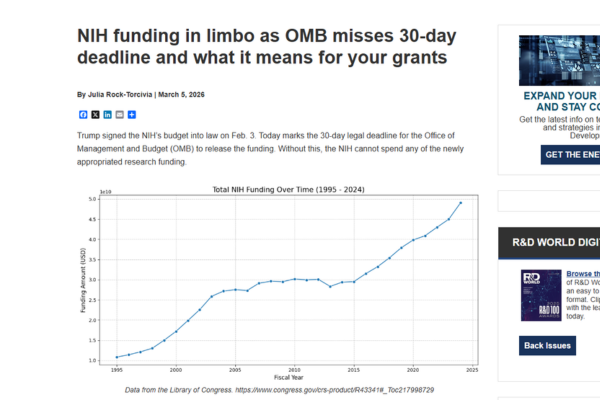
NIH Funding in Limbo Following OMB Delay
Delays in research funding continue to ripple through the research community. This article outlines how funding release timing is impacting NIH grant activity and research timelines in 2026.
A recent article from R&D World highlights ongoing uncertainty around NIH grant funding after the Office of Management and Budget (OMB) missed the statutory 30-day deadline to apportion the agency’s FY26 appropriations. Although Congress approved a $47.2 billion NIH budget, the agency has not yet received authorization from OMB to fully distribute those funds. As a result, NIH has been forced to rely on limited carryover funding and has issued roughly 30% as many new grants and competing renewals compared with the same point in recent fiscal years. The delay has significantly slowed new funding opportunities and grant awards, creating uncertainty for researchers awaiting decisions. If the funding is eventually released later in the fiscal year, NIH may need to obligate a large amount of funding quickly before the September 30 fiscal-year deadline, potentially compressing grant review and award timelines.

How Can We Better Support Veterans at Risk for Dementia?
Led by Erin Bouldin, PhD, MPH, a VA research team has published a new protocol paper in JMIR Research Protocols exploring how post-9/11 Veterans at higher risk of Alzheimer’s and related dementias use home and community-based services (HCBS). The goal of the study is to understand Veterans’ and caregivers’ needs, preferences, and barriers to these services, ultimately identifying ways to improve support.

Post-9/11 Veterans are at higher risk of Alzheimer’s and related dementias. VA researchers are studying ways to improve vital support services for these Veterans and their caregivers.
Study Overview
Led by Erin Bouldin, PhD, MPH, a VA research team has published a new protocol paper in JMIR Research Protocols exploring how post-9/11 Veterans at higher risk of Alzheimer’s and related dementias use home and community-based services (HCBS). The goal of the study is to understand Veterans’ and caregivers’ needs, preferences, and barriers to these services, ultimately identifying ways to improve support.
The research article is freely available at https://www.researchprotocols.org/2026/1/e83629/
Why This Research Matters
Veterans have a higher risk of developing Alzheimer’s disease and related dementias (AD/ADRD) than their non-Veteran peers. This is due in part to military exposures, like traumatic brain injury (TBI). AD/ADRD is not common among people under age 65, but it does occur and is often referred to as early-onset dementia.
Not much is known about what home and community-based services (HCBS) Veterans with AD/ADRD who served in the post-9/11 era and their caregivers use. These services can help Veterans live at home and stay active and healthy. In order to design and deliver effective HCBS that promote health and well-being among Veterans and their caregivers, the current needs and preferences for HCBS among Post-9/11 Veterans with early-onset AD/ADRD and their caregivers must be understood. This study aims to fill these knowledge gaps so that tailored and effective HCBS can be tested and delivered in the future.
Study Objectives
This study aims to:
Measure HCBS use among post-9/11 Veterans with or at higher risk of AD/ADRD.
Identify facilitators, barriers, and preferences for HCBS among Veterans and family caregivers.
Prioritize HCBS interventions with input from Veterans and family caregivers.
To achieve these goals, the research team will use existing data and collect new data using interviews and preferences surveys with Veterans and caregivers. Researchers will enroll post-9/11 Veterans with ADRD, TBI, epilepsy, or cognitive impairment and their family members and friends who provide care to them. This study will quantify current HCBS use and identify barriers and needs of Veterans with or at higher risk of AD/ADRD and their caregivers. It will identify HCBS modifications that have consensus for needed changes, which will be shared with health system leaders.
Innovation and Impact
This study has the potential to impact the health and quality of life of Post-9/11 Veterans with early-onset AD/ADRD and their caregivers by better understanding both current HCBS use and preferences for these services in the future. It is innovative in its focus on younger (Post-9/11) Veterans who predominantly have early onset forms of AD/ADRD, and in its inclusion of the family caregiver. The results will inform new services and approaches to increase acceptable and effective HCBS for Veterans and caregivers.
Ultimately, these HCBS can improve the health and quality of life of Veterans and those who care for them. The proposed project will advance the mission of the Department of Defense (DoD) Peer-Reviewed Alzheimer’s Research Program to reduce the burden of AD/ADRD on affected individuals and caregivers, especially in the Military and Veteran communities.
This study is funded by the U.S. Department of Defense (DoD) and supported by the Western Institute for Veterans Research (WIVR), UT Health San Antonio, the University of Utah, the, and the U.S. Department of Veterans Affairs (VA).
References
Bouldin ED, Cheney A, Pugh MJ, Morales K, Delgado RE
Home- and Community-Based Service Use and Preferences Among Post-9/11 Veterans With or at High Risk of Alzheimer Disease and Related Dementia and Their Caregivers: Protocol for a Mixed Methods Observational Study
JMIR Res Protoc 2026;15:e83629
doi: 10.2196/83629
PMID: 42054703
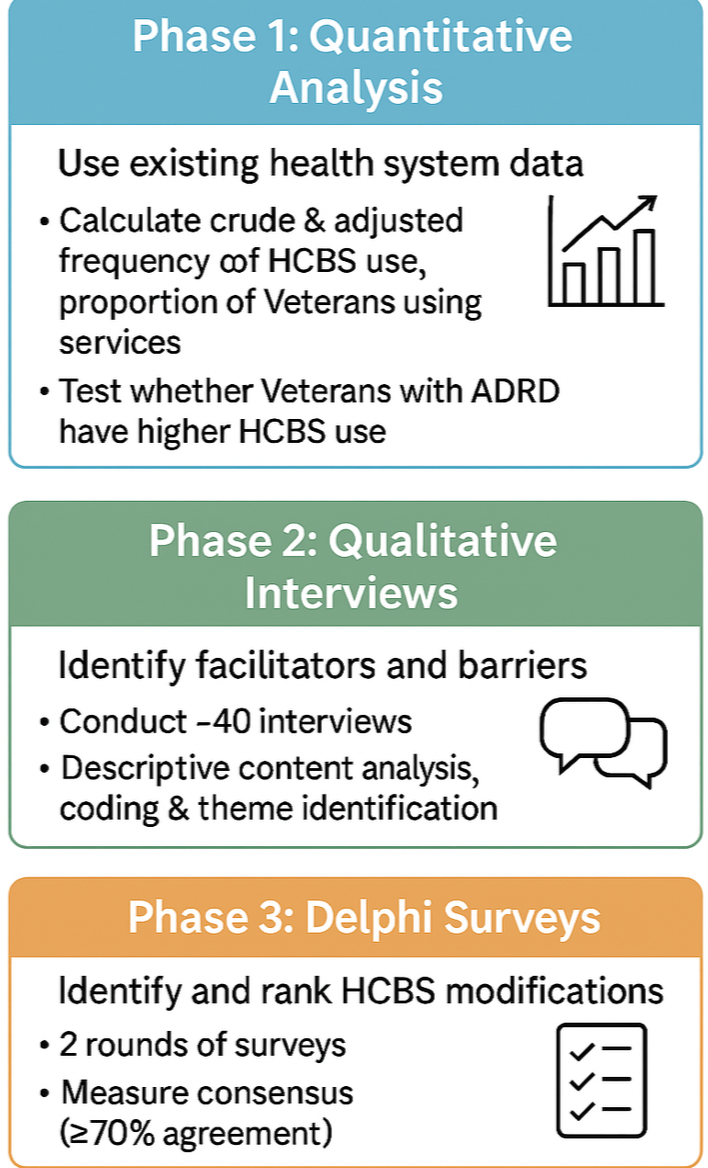
Figure 1. Summary of study activities for each aim (phase). Reproduced with permission from Bouldin, E. D., Cheney, A., Pugh, M. J., Morales K., & Delgado, R. E. (2026). Home- and community-based service use and preferences among post-9/11 veterans with or at high risk of Alzheimer's disease and related dementia and their caregivers: protocol for a mixed methods observational study. JMIR Research Protocols. https://doi.org/10.2196/83629
ARTICLE TITLE:
Home- and Community-Based Service Use and Preferences among Post-9/11 Veterans With or at High Risk of Alzheimer's Disease and Related Dementia and their Caregivers: Protocol for a Mixed Methods Observational Study
JOURNAL:
JMIR Research Protocols
AUTHORS:
Erin D Bouldin, MPH, PhD; Amanda Cheney, BS; Mary Jo Pugh, PhD, RN; Kayla Morales, PhD; Roxana E Delgado, MS, PhD
ARTICLE PUBLICATION DATE:
April 29th, 2026
RESEARCH KEYWORDS:
frontotemporal dementia, early-onset dementia, traumatic brain injury, home-and community-based services, personal health services, patient preference, independent living, observational study
DOI:
Cover Image Designed by Freepik. www.freepik.com

Follow WIVR On LinkedIn
Follow WIVR on LinkedIn for updates, featured news, and research insights. Get a closer look at our latest research, announcements, and the people driving our mission forward.

Follow WIVR on LinkedIn for updates, featured news, and research insights. Get a closer look at our latest research, announcements, and the people driving our mission forward.